
Music
Devan Ekambaram and Susha Bring Bharati’s “Varuvaaiy” to the Grammys
The Tamil-language recording, built around a devotional poem by Subramania Bharati, has earned a nomination for Best Global Music Performance at the 69th Annual Grammy Awards. For an Indian-American composer-singer and a Chennai vocalist shaped by Carnatic music and Toronto jazz education, the recognition brings several musical traditions into the same frame.
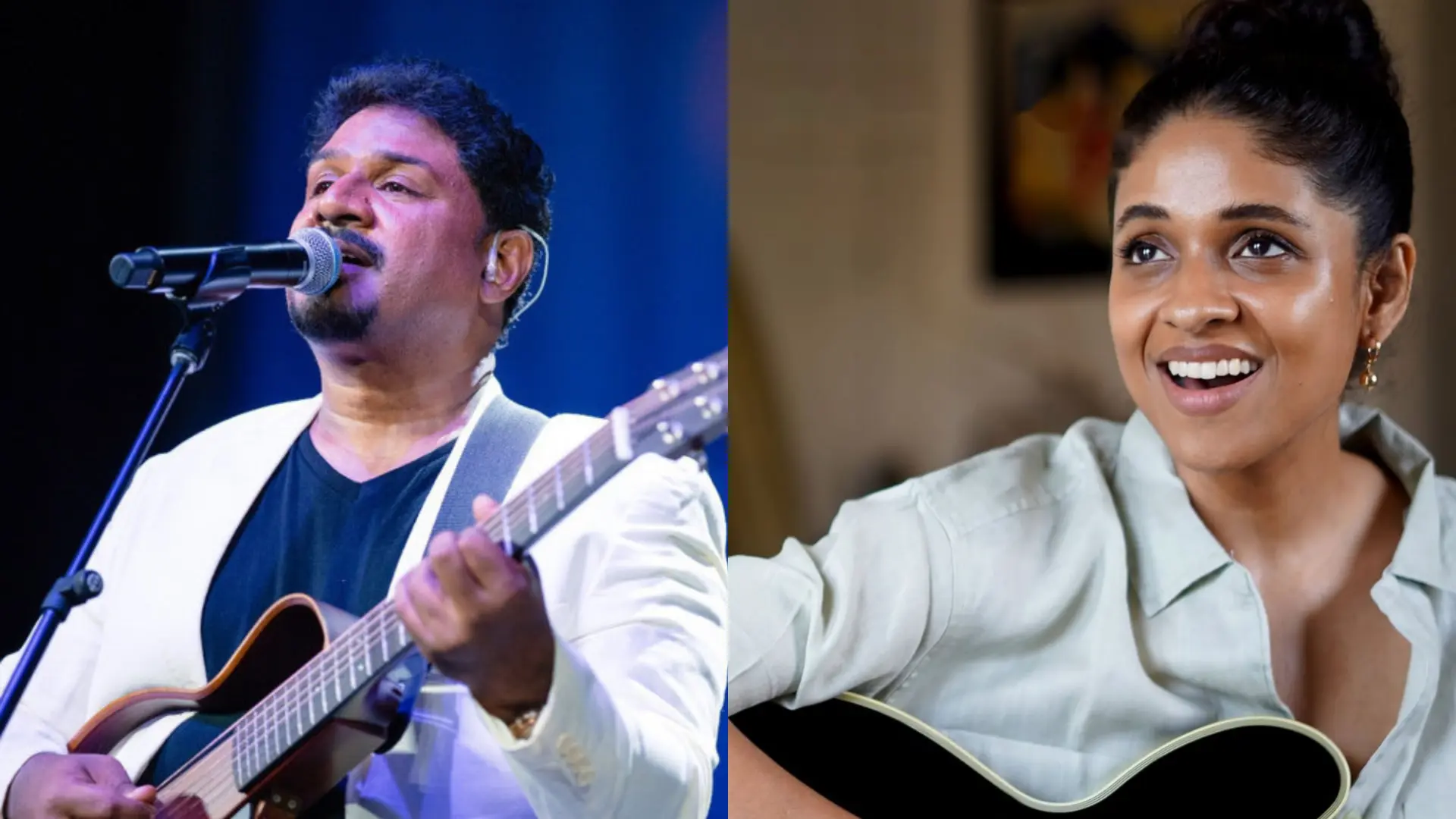
Photograph for ITFMA. All rights reserved.
The Recording Academy’s announcement of the nominations for the 69th Annual Grammy Awards on November 16 brought a milestone for Tamil music. “Varuvaaiy,” a recording by Indian-American composer and playback singer Devan Ekambaram featuring Chennai-based vocalist Subhiksha Rangarajan, professionally known as Susha, has been nominated for Best Global Music Performance at the 2027 Grammys.
The nomination places a Tamil-language recording built around the devotional poetry of Subramania Bharati within one of the Recording Academy’s international performance categories. It also brings together two artists whose musical paths have developed across different environments: Ekambaram, who grew up in the United States before establishing a career in South Indian cinema, and Susha, whose grounding in Carnatic music has since expanded through jazz composition and performance in Toronto.
Ekambaram described the moment as a first for Tamil-language music. In an Instagram statement reprinted by Mathrubhumi, Hindustan Times and Moneycontrol, he called the nomination “the very 1st Tamil Song to ever be nominated” and expressed particular pride that the recording draws from a Bharati poem. The distinction requires some precision. The Academy has officially nominated “Varuvaaiy” in Best Global Music Performance; it has not designated the recording as the first Tamil song to receive a Grammy nomination. No earlier Tamil-language nominated recording was identified in the research for this feature, although that finding should not be confused with an official Academy declaration.
Both Ekambaram and Susha are listed on the Grammy website as first-time named nominees, with zero wins and one nomination apiece. The nomination is recognition of the recording, not an award for the poem itself or a Grammy win.
A poem with a life beyond the recording
The traditional composition is commonly known as “Varuvai Varuvai” or “Varuvai Varuvai Varuvai Kanna.” Written by Subramania Bharati, the Tamil poet whose work remains central to modern Tamil literary and cultural life, the devotional poem addresses Krishna as Kanna. The Grammy-nominated recording uses the title “Varuvaaiy,” a distinct official title for this contemporary musical interpretation.
The poem already occupies a familiar place in Carnatic concert repertoire. Its presence in the classical tradition makes the nomination particularly interesting: this is not a new lyric created to fit a global music category, but a work with an established musical and literary history being presented through a contemporary recording.
Bharati’s poetry frequently moved between devotion, social imagination and political consciousness. In its interpretation of “Varuvai Varuvai,” The Indian Express describes the poet’s appeal for Krishna to descend into human intellect and consciousness and destroy the demons. The paper also reads that imagery as a possible metaphor for colonial rule. The precise date of the poem is unknown; The Indian Express suggests it was likely written during Bharati’s decade-long exile in French-ruled Pondicherry, where he had fled British arrest warrants.
The 2026 interpretation takes a different musical route from the poem’s traditional concert associations. The Indian Express and Mathrubhumi report that the arrangement uses raag Desh, alongside contemporary instrumentation and neo-jazz influences. That description belongs to this particular interpretation. Traditional Carnatic listings of the composition often associate it with Todi, or Hanumatodi, and the two contexts should not be treated as interchangeable.
The single was released on August 12, 2026, as “Varuvaaiy (feat. Susha),” making it eligible for this Grammy cycle, which covers recordings released between August 31, 2025, and August 28, 2026. It appeared as an independent release, with the digital platforms listing the copyright imprint as 2328686 Records DK, a DistroKid imprint. The available Grammy song-page credits do not provide a complete set of songwriter, producer or engineer personnel, so the recognition is best understood through the two artists named on the official nomination.
From Chennai playback to independent music
For Ekambaram, the nomination arrives after a career that has moved between the commercial structures of South Indian film music and independent Tamil projects.
An Indian-American who grew up in the United States, Ekambaram travelled to India in 1995 during a summer break from engineering studies at the University of Illinois to explore opportunities in music. According to The Indian Express, that journey led to a record deal in Chennai and a debut album recorded after A. R. Rahman heard his work.
His early album, Kamban Oru Kannile, was released in 1998 through Magnasound Records with S. P. Charan. The following year, he made his playback debut with “Oh Maria” in Kathir’s Kadhalar Dhinam, a film composed by Rahman, performing alongside Yugendran.
The early credits placed him within a generation of singers whose voices became part of the changing sound of Tamil cinema. His work extended to Ilaiyaraaja compositions, including “Nenachapadi” in Time (1999) and “Manjal Poosum” in Friends (2001). Other widely recognised film recordings include “Ore Nyabagam” from Minnale, composed by Harris Jayaraj, and “Anbil Avan” from Rahman’s Vinnaithaandi Varuvaayaa, alongside Chinmayi.
Ekambaram later moved further into composition, making his film-composer debut with Siddharth Chandrasekar’s Bale Pandiya in 2010. His career has since extended across Tamil and other South Indian film industries, while independent Tamil music has remained a parallel pursuit. He has said that he has been creating independent Tamil music since 1998.
That distinction matters in understanding “Varuvaaiy.” Ekambaram is not arriving at the Grammy conversation as an artist detached from the film industry. His career was built through playback singing and composition within South Indian cinema, but the nominated recording is an independent single rather than a film soundtrack. It represents a part of his musical work that exists outside the conventional film-release cycle.
A Chennai voice shaped by Carnatic music and jazz
Susha’s path brings another perspective to the recording. A Chennai-based singer, composer and visual artist, Subhiksha Rangarajan began training in Carnatic and South Indian classical music at the age of five. She comes from a family of South Indian classical musicians; her mother is Carnatic vocalist Lakshmi Rangarajan. In an interview with The Hindu, Susha recalled singing the invocation at her mother’s album launch, while describing a period of Carnatic training that extended across more than two decades.
Her education later took her to Canada, where she completed a Master’s in Jazz Performance and Composition at the University of Toronto. The combination has informed a musical approach that moves between Indian melodic traditions, jazz improvisation and contemporary sounds. Rolling Stone India had described her as a Chennai neo-jazz vocalist as early as 2020.
Her independent career also predates the Grammy announcement. In 2019, she was selected among the Top 24 artists in NEXA Music, an initiative by A. R. Rahman and Clinton Cerejo focused on independent English-language artists. She entered with her self-written single “Different.”
Her work has also crossed into film. She contributed playback vocals to “Agam Thaanai” from Sillu Karupatti and composed music for Achcham Madam Naanam Payirppu. In August 2026, she released Love Language, her debut full-length album of original music. The 12-track project moves between English and Tamil, with three Tamil songs. As reported by The Hindu, the album came together over two years, drawing on songs written at different points in her life, and was introduced through a launch performance at Medai in Chennai.
There is no published statement from Susha about the Grammy nomination in the material available for this feature. Her inclusion on the official nominee listing, however, places her alongside Ekambaram as one of the two named artists recognised for the recording.
A global category, and a wider Tamil conversation
Best Global Music Performance is not a category reserved for any one language, region or musical tradition. The five nominated recordings this year illustrate its range: “Varuvaaiy” by Devan Ekambaram featuring Susha; “Una Flor En Cada Estrella” by KerreKe, Mireya Ramos and Alex E. Chávez; “Bando [Orchestral]” by Angélique Kidjo, Pharrell Williams and Quavo; “Porcelana” by ROSALÍA and Dougie F; and “Dai Dai” by Shakira and Burna Boy.
That company puts the Tamil recording in a conversation extending well beyond the South Indian film industry. Angélique Kidjo brings a history of multiple Grammy wins, while Rosalía, Shakira and Burna Boy represent distinct contemporary approaches to music crossing language and geographic boundaries. “Varuvaaiy” enters that field with a different foundation: a Tamil devotional poem, a vocalist shaped by Carnatic training and jazz education, and a singer whose professional history spans Indian-American independent music and South Indian playback.
Some coverage has described the recording as India’s only Grammy nomination this year. That wording needs context. It refers to the only nominated recording led by Indian artists identified in that coverage, not the only Grammy-nominated project with Indian musicians involved. Gorillaz’s The Mountain is separately nominated for Best Alternative Music Album. The Indian Express notes that the album includes featured contributions from Indian musicians such as Anoushka Shankar, Ajay Prasanna, Asha Bhosle, Amaan and Ayaan Ali Khan, among others. The official nominee in that album category is Gorillaz.
The 69th Annual Grammy Awards will take place on February 7, 2027, at Crypto.com Arena in Los Angeles. The main ceremony is scheduled to air live on ABC, Disney+ and Hulu at 7 p.m. ET. The nomination is an important point of visibility for a Tamil-language work, but its meaning is not limited to a first-of-its-kind claim. It connects a poem already carried through generations of classical performance with independent recording, film-music experience and a contemporary vocalist shaped by two musical education systems.
For Tamil music, the significance may ultimately lie in that intersection. “Varuvaaiy” has reached the Grammy stage without leaving behind the literary and musical traditions from which it emerged. Its nomination offers a wider audience an opportunity to encounter a Tamil work not simply as a regional film-industry product, but as part of a much broader, evolving musical landscape.
Submissions and reader letters are welcome at itfmaconnect@gmail.com.
Related Reading


Clarence Jey: The Tamil Producer Behind Rebecca Black's “Friday” and a Career Across Hollywood
From co-writing and producing one of the internet's most recognisable viral songs to composing for American television, film and Grammy-winning projects, Sri Lankan Tamil producer Clarence Jey has built an international career across the entertainment industry.

ofRo: The Producer Behind the Rise of Independent Tamil Music
From discovering Asal Kolaar and developing Kelithee to collaborating with Arivu, Paal Dabba and ADK, Chennai-based producer ofRo has helped shape the sound, talent and infrastructure of independent Tamil music.