
Music
Dhee, Lara Raj and a Borderless Tamil Future
On “Vari Vari (Unna Kaadhaliche),” two Tamil artists arrive at the same record from opposite directions.
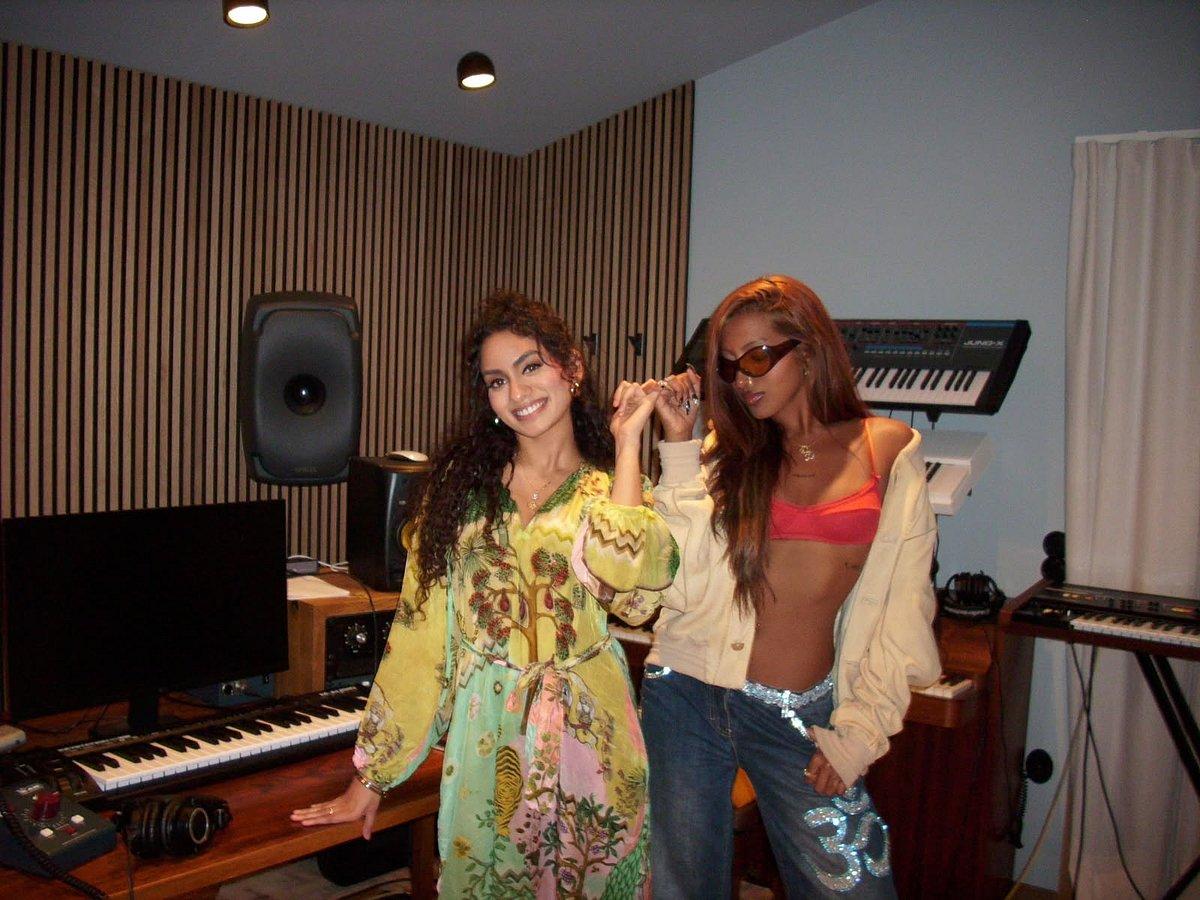
Photograph for ITFMA. All rights reserved.
There is something quietly significant about Dhee and Lara Raj appearing on the same record.
Their careers were shaped by very different worlds. Dhee built her identity through Tamil music, while Lara Raj found her footing inside the Western mainstream. On “Vari Vari (Unna Kaadhaliche),” those two journeys meet.
Dhee, raised in Australia in a Tamil family, has spent much of her career exploring identity, home and culture through music. Her voice became widely recognized through Tamil cinema, before records like “Rowdy Baby” and “Enjoy Enjaami” pushed her beyond the traditional boundaries of the industry.
What has always made Dhee stand out is that her global appeal has never required her to move away from her roots. Her language, cultural identity and connection to Tamil music have remained central to her work.
In many ways, her rise helped show that Tamil music did not need to become less Tamil in order to travel.
Lara Raj comes from a very different path.
Raised in the United States in a Tamil family, she entered the global music industry through Western pop. As a member of KATSEYE, the international girl group formed by HYBE and Geffen Records, Lara quickly found herself operating within one of the most visible spaces in contemporary pop.
But even as her career expanded globally, her Tamil and South Asian identity remained visible.
Through fashion, public appearances and the way she speaks about her upbringing, Lara has represented a generation of diaspora artists who no longer see cultural identity and mainstream success as two separate things.
That is what makes her collaboration with Dhee feel especially meaningful.
Dhee represents an artist who carried Tamil music outward into the world. Lara represents a different journey, someone who entered the global mainstream first, then found her way into a Tamil musical space.
They arrive at the same record from opposite directions.
And that is where “Vari Vari” becomes more than just a remix.
Their collaboration reflects the reality of a generation shaped by migration, mixed identities and multiple definitions of home. Tamil culture today is no longer being created from one place. It exists across Chennai, Jaffna, Toronto, London, Sydney, Paris, Los Angeles and countless other cities where Tamil communities continue to build, create and evolve.
The music is beginning to reflect that geography.
For decades, international success often required artists outside the West to adapt to Western expectations. Language, sound and identity were often softened in order to feel more accessible.
“A future where being Tamil is not something that needs to be translated before it can be understood.”
But global music has changed.
Korean pop, Latin music and Afrobeats have shown that audiences are increasingly willing to embrace music without asking artists to dilute where they come from.
Tamil music appears to be moving toward that same moment.
There have already been important signs of this shift. A.R. Rahman brought Tamil and Indian music onto global stages. M.I.A. placed Tamil identity inside Western alternative culture. “Enjoy Enjaami” showed that a Tamil record deeply rooted in language, land and ancestry could still reach listeners around the world.
Now a younger generation is pushing that story forward.
What makes Dhee and Lara Raj significant is not simply that two Tamil women collaborated on a song.
It is how they got there.
One travelled from Tamil music toward the world.
The other travelled through the world and found her way toward Tamil music.
Together, they represent a new kind of Tamil artist, one no longer defined by geography, industry or a single idea of what Tamil music is supposed to sound like.
“Vari Vari” offers a glimpse of that future.
A future where Tamil artists do not have to choose between cultural authenticity and global ambition.
A future where being Tamil is not something that needs to be translated before it can be understood.
And perhaps most importantly, a future where Tamil music is not simply trying to enter the mainstream.
It is becoming part of what the mainstream sounds like.
Submissions and reader letters are welcome at itfmaconnect@gmail.com.
Related Reading
Ratty Adhiththan and a Tamil Hip-Hop Without a Single Centre
Shaped by Jaffna, Malaysia and France, Ratty Adhiththan helped widen the definition of Tamil music while staying rooted in language.
Smith Asher Steps Forward Under Anirudh’s Albuquerque Records
Singer, producer, guitarist and programmer Smith Asher steps into the spotlight with “Annakiliye,” released on Anirudh Ravichander’s Albuquerque Records.
In Toronto, Yanchan Turns a Live Show Into a Portrait of the City
More than 650 people, eight surprise guests and a Boiler Room style room: Yanchan's VETRI Promo show became a portrait of Toronto's layered musical identity.