
Music
Ecca Vandal: Between Tamil Heritage and Punk Rock
South African-born and Melbourne-raised, the Sri Lankan Tamil artist has built an international career by bringing punk, hip-hop, jazz and alternative music into a sound that refuses to fit into one category.
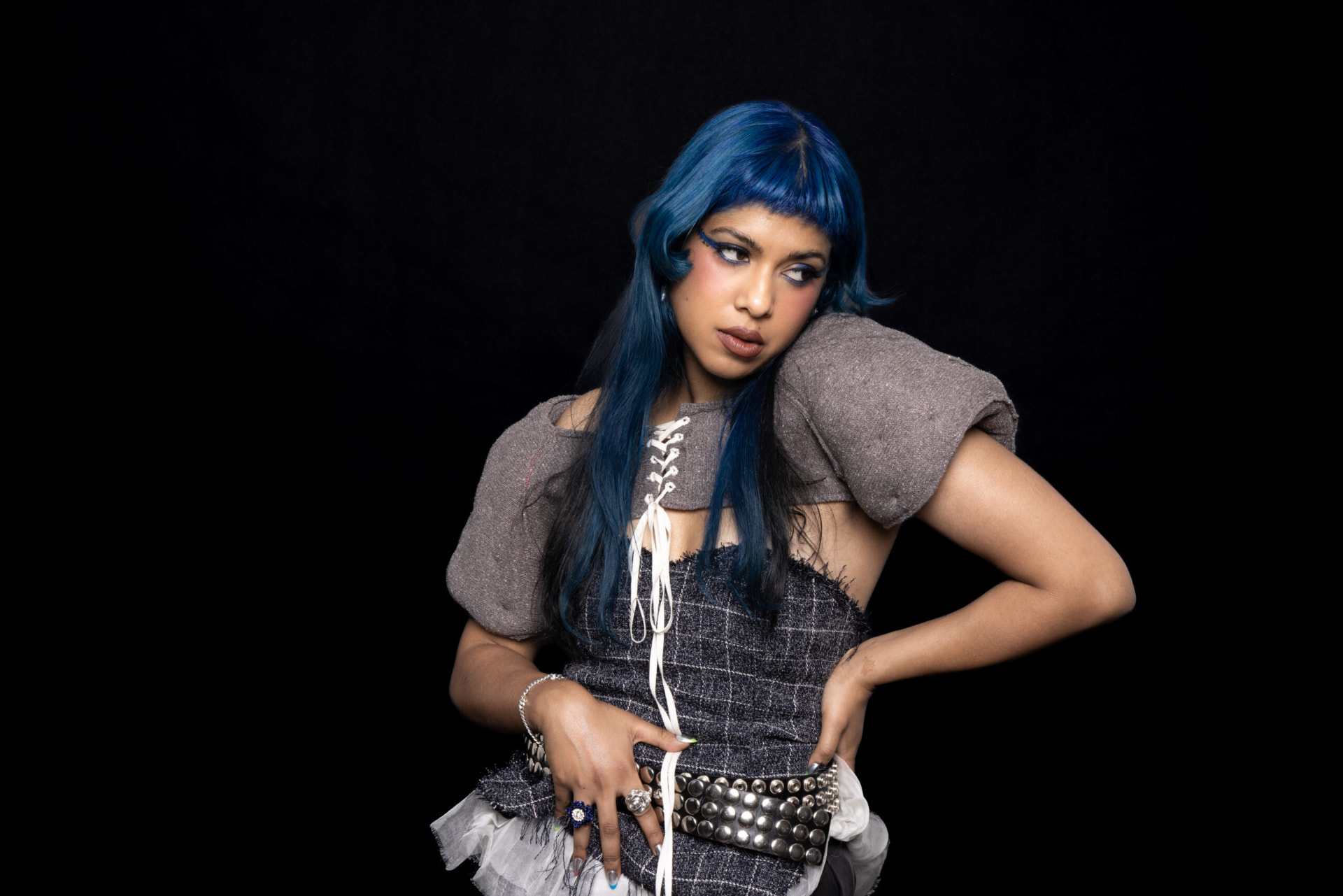
Photograph for ITFMA. All rights reserved.
Punk has always been associated with challenging expectations. It questions established ideas, rejects convention and creates space for voices that do not necessarily fit within the mainstream. For Ecca Vandal, that spirit of independence extends beyond the music itself. Her journey from South Africa to Australia, her Sri Lankan Tamil heritage and her experiences navigating predominantly white alternative music spaces have all contributed to the perspective behind her work.
Born in Louis Trichardt, South Africa, to Sri Lankan Tamil parents, Vandal spent her early childhood surrounded by the music and traditions of her family. Her parents had relocated from Sri Lanka to South Africa, where she was born, before the family eventually moved to Melbourne, Australia. In a 2016 interview, Vandal spoke about growing up in a household filled with music, describing a family environment where singing, instruments and collective musical experiences were part of everyday life.
Her early musical influences were not limited to one tradition. Gospel, soul and R&B formed part of the soundscape at home, alongside the musical traditions connected to her Sri Lankan Tamil background and South African upbringing. Vandal has spoken about how singing and dancing were deeply embedded in her family and cultural environment. Looking back, she recognised that these early experiences helped shape her appreciation for vocal harmonies, rhythm and musical expression.
After settling in Melbourne, Vandal began developing her musical interests through formal study. She initially pursued classical music, studying violin and piano before discovering jazz. She eventually enrolled in the Victorian College of the Arts, where her understanding of music expanded beyond the traditions she had encountered growing up.
Her musical education would become an important part of a much broader creative identity. Through her older sister's record collection and the music she encountered in Australia, Vandal developed an interest in artists such as Nat King Cole and Whitney Houston, before exploring alternative acts including Radiohead, Fugazi, the Pixies and Björk. Jazz, hip-hop, soul, punk and electronic music became parts of the same musical vocabulary.
That combination would eventually become central to her sound.
Vandal began releasing music under her own name in the mid-2010s. Her early single “White Flag” introduced audiences to a sound that combined punk energy with hip-hop influences and a distinctive vocal approach. It was followed by the End of Time EP in 2016, which helped establish her presence in Australia's independent music scene.
In 2017, she released her self-titled debut album. The record brought together alternative rock, punk, hip-hop and electronic influences, while introducing a wider audience to her approach to songwriting. Its collaborations included “Your Orbit” with Sampa the Great and “Price of Living,” featuring Refused vocalist Dennis Lyxzén and Jason Aalon Butler of letlive. The latter addressed Australia's treatment of asylum seekers, demonstrating how political and social subjects could sit alongside the album's more personal themes.
Her work continued to move across musical communities. In 2019, she collaborated with Australian hip-hop group Hilltop Hoods on “Exit Sign,” featuring Illy. She also worked with electronic producer Alice Ivy on “In My Mind.” These collaborations demonstrated her ability to move between alternative rock, electronic production and Australian hip-hop without abandoning the sound she had been developing as a solo artist.
Despite that momentum, Vandal eventually stepped away from the constant demands of the music industry. Following the release and touring cycle of her debut, she reassessed what she wanted her music and career to become. She spent an extended period away from social media and the pressures of maintaining an online presence, using the time to reconnect with her creative process.
“Her work demonstrates that Tamil identity can exist across musical traditions, scenes and audiences without needing to conform to a single definition.”
That period of distance eventually informed her second album, LOOKING FOR PEOPLE TO UNFOLLOW, released on May 22, 2026. Created with her longtime musical collaborator Richie “Kidnot” Buxton, the record developed through an intentionally isolated recording process in a small studio space at Buxton's family home. Without the usual distractions of online activity and industry expectations, the pair were able to experiment with sounds and ideas on their own terms.
The album brings together punk, hardcore, hip-hop, trip-hop, alternative rock and other influences. Tracks such as “BLEED BUT NEVER DIE,” “CRUISING TO SELF SOOTHE,” “THEN THERE'S ONE” and “MOLLY” demonstrate the range of Vandal's songwriting and production. Rather than treating genre as a fixed identity, she moves between contrasting sounds while maintaining a recognisable vocal presence.
Her Tamil heritage also has a visible place in this chapter of her work. In the music video for “BLEED BUT NEVER DIE,” Vandal wears a saree as part of the video's visual presentation. Speaking to The Guardian in 2026, she explained that she wanted to represent something beautiful from her Sri Lankan identity. It is a deliberate expression of heritage within a visual world otherwise shaped by punk performance, amplifiers and alternative fashion.
The album's release coincided with a significant period of international activity. Vandal toured with Limp Bizkit, performed at Coachella for the first time in 2026 and appeared on major festival stages internationally. She also joined Deftones and Interpol for arena performances in Australia. These opportunities placed her music before audiences across different generations and corners of alternative music.
For Tamil audiences, Vandal's career offers a perspective on what representation can look like beyond familiar musical categories. Her work does not rely on fitting into a narrowly defined idea of Tamil music, nor does her identity exist separately from her creative life. Instead, her background forms one part of a wider musical perspective shaped by migration, family, cultural memory and the communities she has encountered.
Her journey also reflects the experiences of artists who grow up between cultures and find themselves navigating spaces where they do not always see people who share their backgrounds. Vandal has spoken about feeling like the only Brown child at school and about the difficulty of finding belonging. Music became a place where those experiences could be explored rather than concealed.
Ecca Vandal's career is not simply a story of crossing genres. It is a story of building an artistic identity without allowing expectations to determine its limits. From her Sri Lankan Tamil roots and South African birthplace to Melbourne's alternative music scene and international stages, she has developed a sound shaped by multiple influences but defined by her own creative direction.
Her work demonstrates that Tamil identity can exist across musical traditions, scenes and audiences without needing to conform to a single definition. In a genre often associated with rebellion and individuality, Vandal has made that independence central to both her music and her identity.
Submissions and reader letters are welcome at itfmaconnect@gmail.com.
Related Reading
Devan Ekambaram and Susha Bring Bharati’s “Varuvaaiy” to the Grammys
The Tamil-language recording, built around a devotional poem by Subramania Bharati, has earned a nomination for Best Global Music Performance at the 69th Annual Grammy Awards. For an Indian-American composer-singer and a Chennai vocalist shaped by Carnatic music and Toronto jazz education, the recognition brings several musical traditions into the same frame.


Clarence Jey: The Tamil Producer Behind Rebecca Black's “Friday” and a Career Across Hollywood
From co-writing and producing one of the internet's most recognisable viral songs to composing for American television, film and Grammy-winning projects, Sri Lankan Tamil producer Clarence Jey has built an international career across the entertainment industry.