
Film
Behind Porattam, a Jaffna Creative Community Steps Onto a Bigger Stage
Raj Sivaraj’s Tamil-language sports drama is the expansion of a creative circle years in the making.
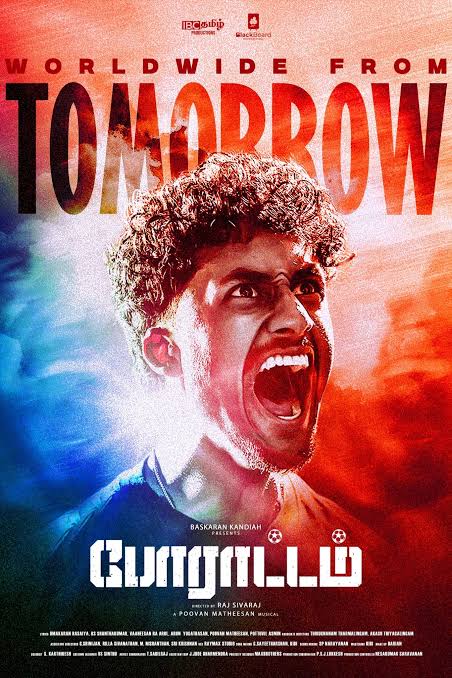
Photograph for ITFMA. All rights reserved.
When Porattam arrived in theatres this month, its most interesting story may not have been the one unfolding on screen.
Behind the Tamil-language sports drama is a network of filmmakers, musicians, technicians and young actors whose careers have been developing for years within Northern Sri Lanka’s independent creative scene. For them, Porattam represents something larger than a single release: an attempt to give Eelam Tamil artists the resources, scale and international theatrical access usually associated with much larger film industries.
At the centre of that effort is writer-director Raj Sivaraj.
Sivaraj is not a filmmaker who appeared suddenly with Porattam. Before moving into feature films, he spent years making shorts, including The Balance, Change, Ini Oru Vithi Seivom and Unlimited, which received recognition through competitions organized by the Women’s Media Collective. His film Serukkulam later placed third at Sri Lanka’s National Short Film Competition in 2017.
His first feature, Puththi Kedda Manitharellam, arrived in 2021, written and directed by Sivaraj and built largely by a filmmaking team based in and around Jaffna. That film already included several names who would return for Porattam, among them composer Poovan Matheesan and editor Arun Yogathasan.
That continuity matters.
Rather than assembling a completely new crew around a larger production, Porattam appears to be the expansion of a creative circle that has been developing together for years.
Sivaraj and Matheesan’s collaboration can be traced at least as far back as 2013, when they worked together through Poovan Media, a small collective producing short films and music videos. That creative network eventually developed into Blackboard International, which became involved in Sivaraj’s earlier feature filmmaking and is now associated with Porattam.
For Sivaraj, the film’s setting is deeply personal. In his director’s statement, he describes himself as belonging to a generation that grew up with struggle embedded in everyday life in Northern Sri Lanka. His interest in football is consequently less about producing a conventional sports movie than about examining what ambition looks like when it is shaped by geography, history and limited opportunity.
But Porattam is also a story about what happens when independent artists are given greater infrastructure.
That is where producer Baskaran Kandiah becomes central.
Through IBC Tamil Productions, Kandiah has positioned the film around Eelam Tamil talent rather than treating that talent as peripheral to a larger Tamil cinema ecosystem. Kandiah has previously spoken about Eelam Tamil filmmaking as a cultural project rather than simply a commercial one, arguing that these films can preserve language, collective experience and stories for another generation.
With Porattam, that philosophy has been paired with an unusually wide release strategy.
The film was produced through IBC Tamil Productions, with Blackboard International involved creatively, before reaching cinemas in Sri Lanka and diaspora markets including Canada, Britain and continental Europe.
It means that a group of artists whose earlier work grew through local short films, music videos and independent productions in Jaffna is now appearing on screens thousands of kilometres away.
The film also marks the lead acting debut of Reegan Kandiah, who plays Miller.
For a first feature role, it is a substantial introduction: Reegan carries a film built around football, family conflict and emotional decline across a running time of roughly two and a half hours. Distributor RFT Films has explicitly promoted Porattam as his acting debut and as an introduction of a new Eelam Tamil performer to international audiences.
Opposite him is Nivedhikah Rasaiah, whose emergence has followed a different route.
Rasaiah had already begun attracting audiences beyond Sri Lanka through the Zee Tamil reality competition Mahanadigai. Reporting around the programme highlighted her as an Eelam Tamil contestant gaining visibility among audiences in Tamil Nadu, and she later finished third in the competition.
“For Eelam Tamil cinema, that collective journey may be more important than any single character on screen.”
Putting Reegan and Nivedhikah at the centre of the film therefore carries its own symbolism: two developing performers from the Eelam Tamil community being presented not simply as supporting talent, but as the faces of a theatrical feature intended for international circulation.
The same philosophy extends into the music.
Poovan Matheesan, Porattam’s composer, has spent years working in Sri Lanka’s independent Tamil music scene. His background stretches beyond film scoring into songwriting, singing, independent releases and music production, with his work connected to more than 150 independent songs and numerous short films and documentaries, according to his published artist biography.
For Porattam, Matheesan created a six-song soundtrack that combines musicians from Sri Lanka with established voices from South India.
Among them is veteran Tamil playback singer and composer Deva, who performs “Soru Than Mukkiyam.” The album also includes contributions from singers and lyricists including Kovai Kamala, Sathyan, Vaaheesan, Pottuvil Asmin, K.S. Shanthakumar, Umakaran Rasaiah and Arun Yogathasan.
That combination is revealing.
Rather than measuring Eelam Tamil cinema against Chennai from a distance, Porattam creates a space in which locally developed musicians and filmmakers can collaborate with established figures from the wider Tamil industry.
And behind its most visible names sits an even larger technical team.
AK Kamal serves as cinematographer, Arun N. Yogathasan as editor and S. Gobithan as art director. Thirugnanam Tharmalingam and Akash Thiyagalingam are associate directors, while the wider crew extends through assistant direction, sound, VFX, colour, costume, production coordination and design.
Some of those collaborations are not new either. Yogathasan and Matheesan were already part of Sivaraj’s earlier filmmaking circle, suggesting that Porattam is less an isolated production than the next stage of a creative infrastructure slowly being built in Jaffna.
That may ultimately be the film’s more lasting significance.
Tamil cinema has traditionally been discussed through powerful centres, Chennai above all, while Eelam Tamil artists have often built their work through smaller independent networks, community media and diaspora audiences.
Porattam does not change that landscape by itself.
What it does offer is evidence of what can happen when a locally developed creative community is given production backing, professional infrastructure and international distribution without abandoning the place from which its artists emerged.
The film may carry one actor’s struggle in its title.
But behind Porattam is another story altogether: a director who spent years making short films, a composer who grew alongside him, technicians who repeatedly returned to the same creative circle, emerging actors stepping onto larger screens, and a producer willing to invest in putting them there.
For Eelam Tamil cinema, that collective journey may be more important than any single character on screen.
Submissions and reader letters are welcome at itfmaconnect@gmail.com.
Related Reading
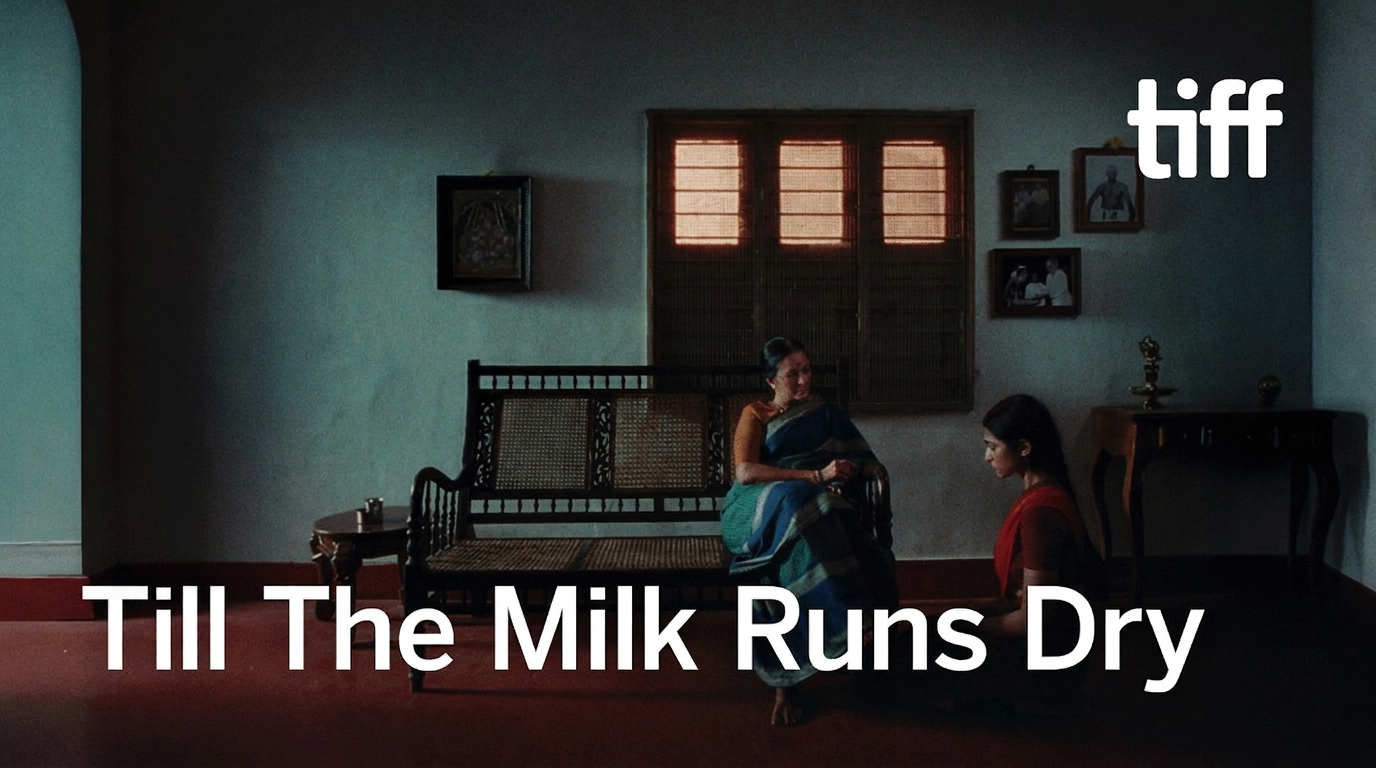
At TIFF, "Till the Milk Runs Dry" Looks Beyond the Grace of the Dancer
Premiering in TIFF's Short Cuts Programme 05, Kalainithan Kalaichelvan's 12-minute Tamil-language short follows a Bharatanatyam dancer whose body becomes the site of a much larger fight.
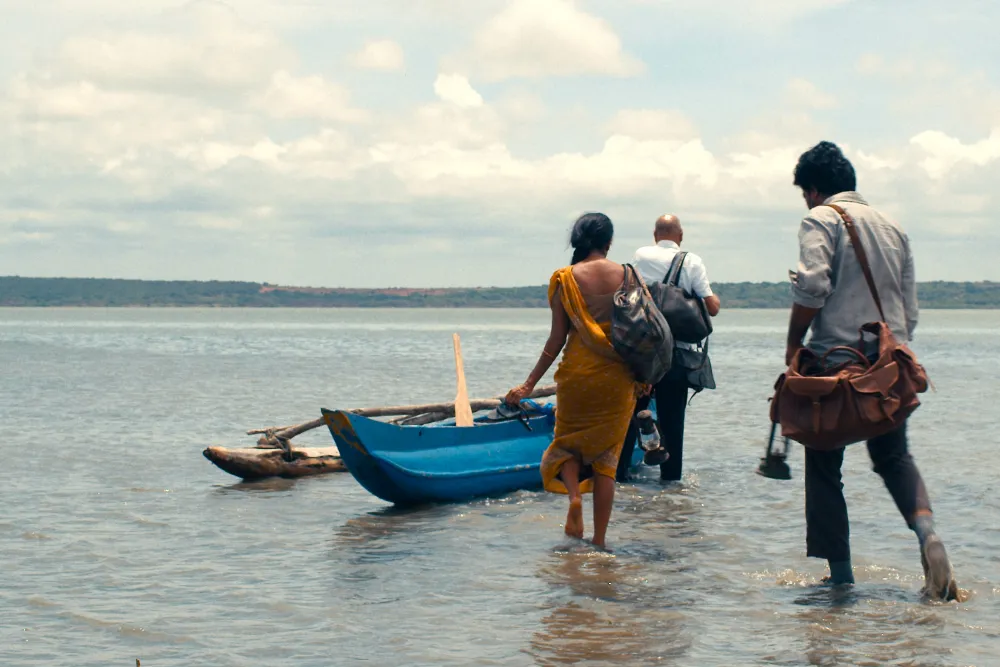
House of My Fathers: A Haunting Tamil Story of Memory, War, and Survival
Suba Sivakumaran's House of My Fathers refuses to reduce trauma into spectacle, building a tense emotional landscape where memory itself becomes the battlefield.

Simone Ashley: The Tamil-British Star Rising From London Roots to Bridgerton, Sex Education, The Little Mermaid and Beyond
Behind the magazine covers and red carpets is a deeper story rooted in Tamil heritage, a British upbringing, and the determination to build a career on her own terms.