
Music
Anirudh's 'Aravindh' Is More Than a Song. It Is a Quiet Rebellion for the Independent Artist.
Named after his best friend who passed away in 2014, Anirudh's first independent release under Albuquerque Records is a tribute to dreamers and a mirror for every musician fighting to remain sincere in the age of algorithms.
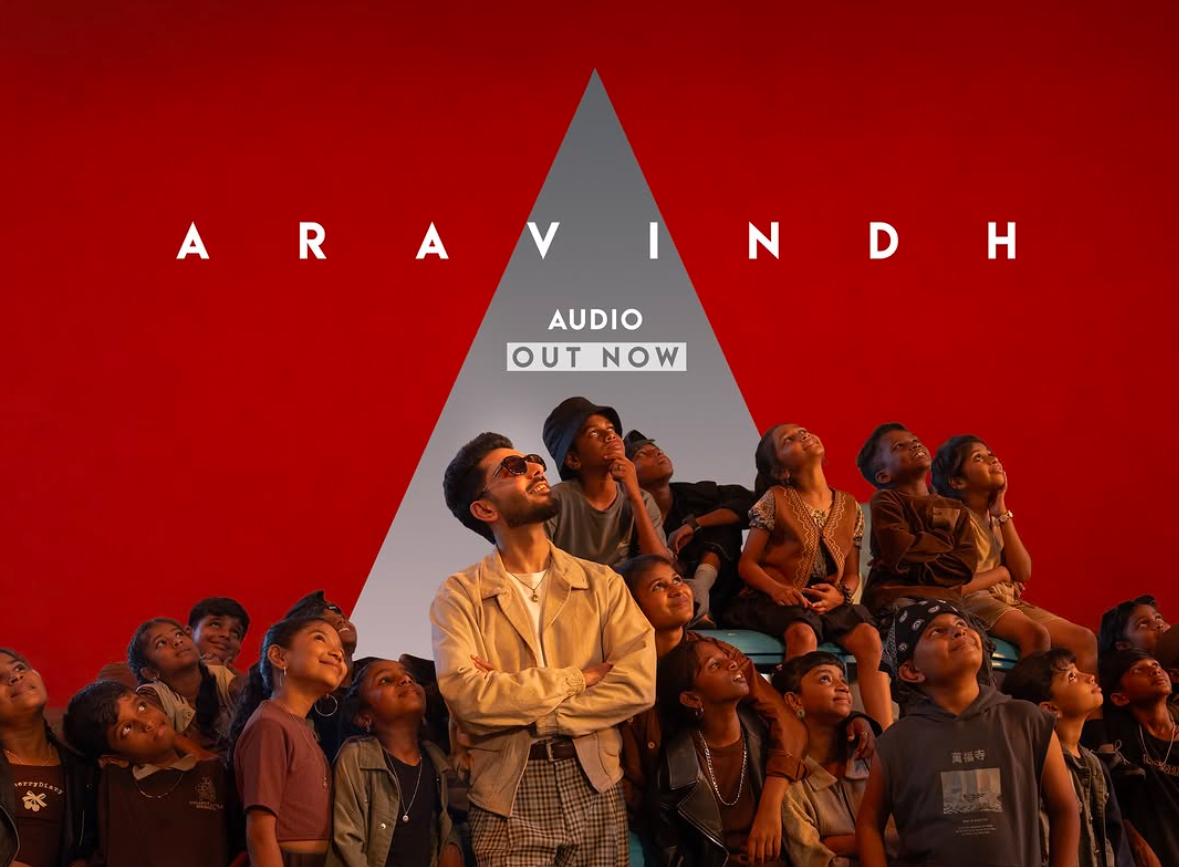
Photograph for ITFMA. All rights reserved.
There is a particular kind of loneliness that comes with making art in the age of algorithms. It does not arrive suddenly. It creeps in slowly, between the hours spent perfecting a melody and the seconds spent wondering whether it will survive online. It sits inside the modern artist's mind as a question: Is the music enough anymore?
With "Aravindh," his first independent solo release under his new label, Albuquerque Records, Anirudh does not attempt to answer that question with noise. Instead, he answers it with memory, honesty and quiet defiance.
Named after his best friend Aravindh, who passed away in 2014, the song carries the weight of both tribute and testimony. But rather than framing grief only as loss, Anirudh turns the story outward. He uses Aravindh's life, and his unfinished dream of becoming an independent artist, as a mirror for every musician still trying to be heard without losing themselves in the process.
The result is a song that feels deeply personal, yet painfully universal.
Penned by Super Subu, "Aravindh" speaks to the private exhaustion of independent creators who find themselves trapped between expression and expectation. The lyrics do not romanticize the struggle. They expose it. In one striking section, Anirudh points to the new economy surrounding music promotion: 2,000 INR for a tweet, 4,000 INR for a reel, 10,000 INR for a dance video. The numbers are specific, almost painfully ordinary, because they reflect the reality many emerging artists now face. Before a song can even breathe, it is already being priced, packaged and pushed into a system that asks not only whether it is good, but whether it can be sold to the algorithm.
That is the quiet ache at the center of "Aravindh."
The song captures the feeling of an artist being told that soulful music is no longer enough. If the composition carries emotion, someone says to make it faster. If the song takes its time, someone says to make it shorter. If the artist has poured their soul into the work, the industry asks whether it can fit into a reel, whether it can trend, whether it can catch attention within the first few seconds. Make the beat faster. Make the song shorter. Make it work for reels. Make it easy for a dance video. Make it fit the unofficial rules of the industry. Somewhere in that process, the soul of the music risks becoming secondary.
But "Aravindh" is not simply a complaint about the state of music. It is a response to it. Anirudh is not making music for the algorithm. He is making music to outlast it. The song carries the belief that music built with sincerity can live beyond the short lifespan of social media hype. It may not always explode immediately. It may not always be engineered for virality. But it can endure. It can become evergreen.
That idea gives "Aravindh" its emotional force. In a time when so much music is shaped around momentary visibility, Anirudh seems to be asking a larger question: What happens to songs that are made for the soul, not the scroll? His answer is found in the song itself.
By telling the story through the perspective of his late friend, Anirudh gives "Aravindh" a depth that cannot be measured by engagement metrics. Aravindh becomes more than a name. He becomes a symbol of the dreamer who never got to complete the journey. Through him, Anirudh gives voice to artists who are still here, still trying, still composing with one eye on their craft and the other on a system that demands constant adaptation.
“Before the algorithm, there was the artist. Before the analytics, there was the feeling. Before the song became content, it was someone's soul.”
It is a bold move for a first independent release. At a time when many artists use label launches to announce scale, ambition and commercial momentum, Anirudh chooses remembrance. He chooses vulnerability. He chooses to begin Albuquerque Records not with a flex, but with a feeling. That choice matters.
Independent music has always carried a kind of defiance. It is the space where artists build without permission, often without infrastructure and sometimes without recognition. But in the current digital era, independence has become complicated. The same platforms that allow artists to bypass old gatekeepers have created new ones. The gatekeeper is no longer always a record executive or radio programmer. Sometimes it is a retention graph. Sometimes it is a trend. Sometimes it is the pressure to spend money before the music has even reached the listener.
"Aravindh" understands that contradiction. It recognizes that independent artists are no longer just fighting to be discovered. They are fighting to remain sincere while being measured. They are fighting to protect the emotional core of their work in an industry that often rewards speed, frequency and format over depth.
In that sense, the song becomes bigger than Anirudh. It becomes an anthem for the artist making music after work, the producer uploading tracks into silence, the singer watching a deeply personal release disappear under the weight of the next trend. It is for the ones who are told to market their pain better, package their dreams tighter and turn their stories into content.
But "Aravindh" also reminds us why artists continue. They continue because music can still hold memory. Because a song can still carry a friend's name across time. Because even in a world obsessed with numbers, there are stories that refuse to be reduced to metrics.
Anirudh could have introduced Albuquerque Records with something designed purely for reach. Instead, he chose a song that asks listeners to slow down. To hear the person behind the artist. To understand the cost of creation in a time when art is constantly being asked to perform.
"Aravindh" is not simply a tribute to a friend who passed away. It is a tribute to the dream he carried. It is also a tribute to every independent artist still carrying their own.
And perhaps that is what makes the song powerful. It does not reject the modern industry outright. It simply refuses to surrender to it. It reminds us that the goal is not to make music for the algorithm, but to make music strong enough to beat it.
Before the algorithm, there was the artist. Before the analytics, there was the feeling. Before the song became content, it was someone's soul.
Submissions and reader letters are welcome at itfmaconnect@gmail.com.
Related Reading
Ratty Adhiththan and a Tamil Hip-Hop Without a Single Centre
Shaped by Jaffna, Malaysia and France, Ratty Adhiththan helped widen the definition of Tamil music while staying rooted in language.

Smith Asher Steps Forward Under Anirudh’s Albuquerque Records
Singer, producer, guitarist and programmer Smith Asher steps into the spotlight with “Annakiliye,” released on Anirudh Ravichander’s Albuquerque Records.

Dhee, Lara Raj and a Borderless Tamil Future
Dhee carried Tamil music outward. Lara Raj of KATSEYE found her way in from the Western mainstream. On “Vari Vari,” their journeys meet.