
Music
The World Still Does Not Know What to Do With M.I.A.
After her removal from Kid Cudi's Rebel Ragers tour, the latest M.I.A. controversy says as much about the audience as it does about the artist.
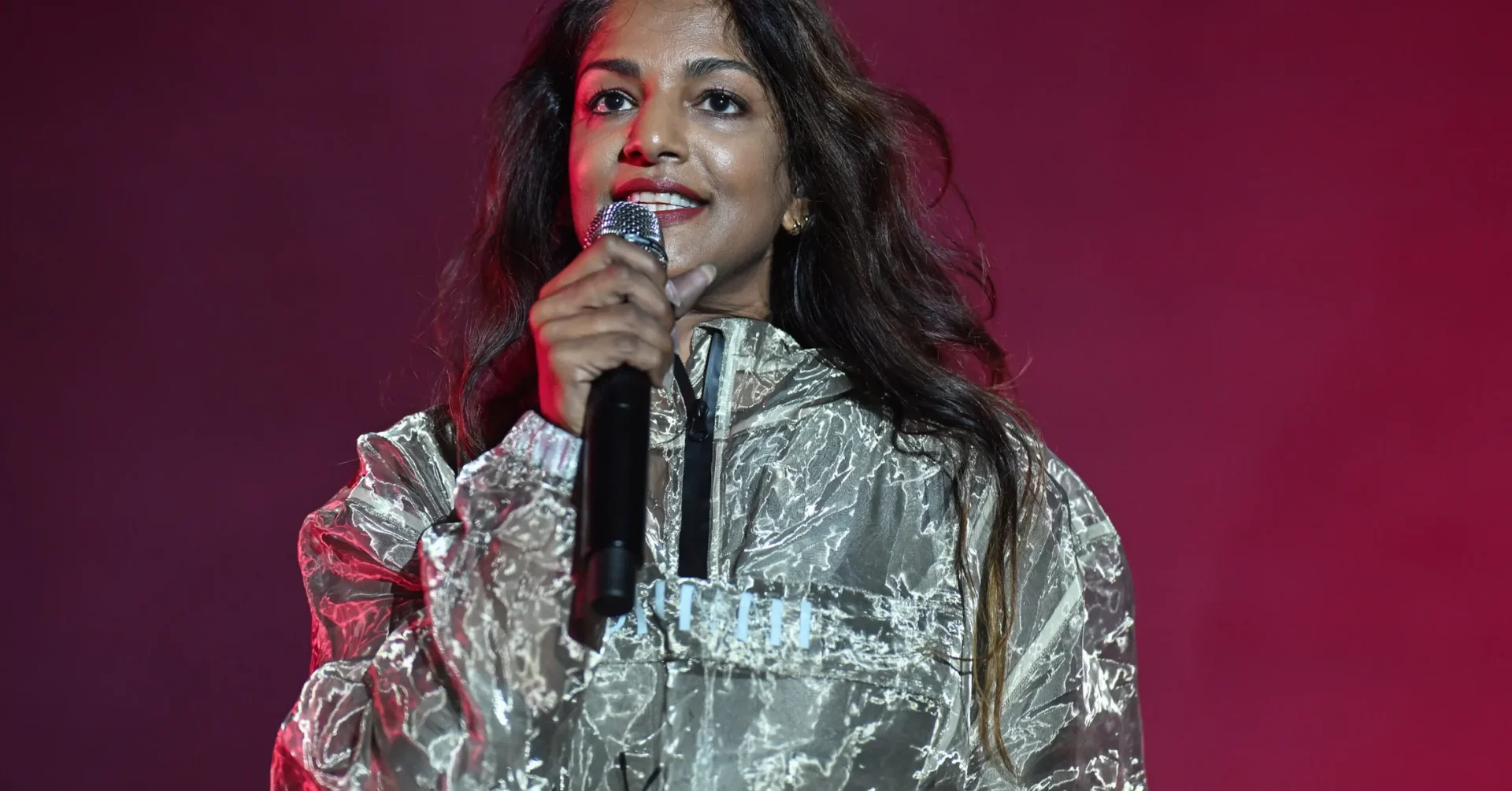
Photograph for ITFMA. All rights reserved.
M.I.A. has always been easier to headline than to understand.
For nearly two decades, Mathangi "Maya" Arulpragasam has occupied one of the most uncomfortable spaces in global pop culture. She is too political for the mainstream, too famous to be underground, too immigrant to be neatly packaged, and too unpredictable to be controlled. Every few years, the world rediscovers her through controversy, turns her into a trending topic, debates whether she has gone too far, and then moves on without ever fully understanding what she represents.
Her latest headlines follow that same pattern.
During her opening set on Kid Cudi's Rebel Ragers tour, M.I.A. addressed the crowd in a moment that quickly spiraled beyond the stage. She referenced her 2010 track "Illygirl," saying she could not perform it because "some of you could be in the audience." The comment was widely interpreted as a jab at undocumented immigrants, and the audience reportedly reacted with boos. She also described herself as being "canceled" for being a "brown Republican voter," turning what many expected to be a concert moment into a political flashpoint.
Not long after, Kid Cudi removed her from the tour.
To many online, the story became simple: M.I.A. had said something offensive and faced the consequences. But with M.I.A., the story is rarely simple. She later argued that the "illegal" reference was connected to the original meaning of "Illygirl," not an attack on immigrants. She pointed back to her own life, her own history, and her long-standing artistic focus on borders, refugees, displacement, and state power. In her view, the audience heard a trigger word, stripped it from context, and decided who she was before she could explain what she meant.
That is the uncomfortable space M.I.A. has lived in for most of her career.
The world has long struggled to process artists who speak from the wounds of displacement rather than the comfort of branding. M.I.A. is not just a pop star who sometimes comments on politics. Her entire artistic identity was shaped by migration, war, surveillance, refugeehood, media distortion, and the Eelam Tamil experience. From Arular to Kala, from "Paper Planes" to "Borders," she turned the language of immigration, violence, and global inequality into music that could shake festival stages while still carrying the weight of history.
That was always the contradiction that made her powerful. People danced to M.I.A. before they fully understood what she was saying.
And maybe that is where the misunderstanding began.
The music industry celebrated her when her politics felt stylish. The neon visuals. The rebel graphics. The global sound. The immigrant cool. The gunshots on "Paper Planes" turned into one of the most recognizable hooks of the 2000s. She was praised when her resistance could be marketed as edgy, fashionable, and exotic. But the moment her politics became harder to digest, less fashionable, or more difficult to categorize, the same world that praised her as fearless began treating her as dangerous, embarrassing, or disposable.
That does not mean every statement M.I.A. makes deserves automatic defense. Her recent public positions have confused, frustrated, and alienated many longtime supporters. Her comments around vaccines, technology, Donald Trump, Robert F. Kennedy Jr., and her OHMNI clothing line have pushed her into spaces that critics associate with conspiracy culture and far-right politics. Some of the criticism is fair. Some of the concern is understandable. Artists are not above accountability simply because they come from struggle.
But there is a difference between accountability and erasure.
What happens too often with M.I.A. is that the conversation skips the difficult part. Instead of asking how a refugee artist who spent her career warning about surveillance, war, censorship, borders, and media manipulation became so distrustful of institutions, the world simply labels her crazy. Instead of separating harmful claims from the deeper anxieties underneath them, the internet turns her into a meme. Instead of reading her contradictions as part of a complicated human being shaped by trauma, exile, fame, and political rejection, the public reduces her to a cautionary tale.
“M.I.A. has spent her career being translated by people who were never fluent in her context.”
That is the tragedy of the M.I.A. conversation.
She has always been an artist speaking from the outside. Outside the West's comfort zone. Outside the polished immigrant success story. Outside the approved language of activism. Outside the music industry's preference for artists who perform rebellion without disrupting business. Even when she was at the center of pop culture, she was never fully inside it.
Her removal from Kid Cudi's tour highlights that tension. A tour is not just a stage; it is a controlled commercial environment. Every artist on it is expected to serve the larger mood of the night. M.I.A., however, has built a career doing the opposite. She interrupts the mood. She brings the border into the nightclub, the refugee camp into the festival, the warzone into the pop hook. That is what made her revolutionary. It is also what makes her difficult to manage.
The world loves rebels until rebellion becomes inconvenient.
For Kid Cudi, the decision may have been about protecting his audience and the environment of his own show. For M.I.A., it became proof of something she has been arguing for years: that the industry wants artists to be outspoken only when their politics are easy to sell. The moment politics become uncomfortable, confusing, or commercially risky, the machine pulls away.
This is why the recent controversy cannot be reduced to a single "rant" headline. What M.I.A. said on stage was messy, provocative, and easy to misread. It also landed in a cultural climate where immigration is one of the most sensitive political issues in America. To some fans, her words sounded like betrayal coming from an artist who built part of her legacy on immigrant identity and border politics. To others, the backlash proved how quickly the public turns on artists who refuse to speak in clean, approved language.
The contradiction is the story.
M.I.A. can be visionary and wrong. Groundbreaking and messy. Misunderstood and responsible for her words. Ahead of her time and caught in dangerous ideas. These things can all be true at once. But the modern media machine struggles with "all at once." It prefers clean categories: icon or embarrassment, genius or conspiracy theorist, activist or villain.
M.I.A. has never fit those categories.
Perhaps that is why her legacy still matters. Before "global music" became an industry buzzword, she was already building it. Before immigrant stories became fashionable in pop culture, she made refugeehood impossible to ignore. Before artists spoke casually about surveillance and borders, she embedded those fears into sound, visuals, fashion, and performance. She helped create the language many artists now use, even as the world continues to punish her for speaking it too loudly.
The latest headlines may frame M.I.A. as another artist in crisis, but they also reveal something about the audience. We still do not know how to hold artists who are politically inconvenient. We still do not know how to critique someone without flattening them. We still do not know how to separate discomfort from danger, provocation from harm, or trauma from spectacle.
M.I.A. has spent her career being translated by people who were never fluent in her context.
Maybe the world did not misunderstand her by accident. Maybe it misunderstood her because understanding her would require admitting that pop culture has always been more comfortable consuming rebellion than listening to where it comes from.
Submissions and reader letters are welcome at itfmaconnect@gmail.com.
Related Reading
Ratty Adhiththan and a Tamil Hip-Hop Without a Single Centre
Shaped by Jaffna, Malaysia and France, Ratty Adhiththan helped widen the definition of Tamil music while staying rooted in language.

Smith Asher Steps Forward Under Anirudh’s Albuquerque Records
Singer, producer, guitarist and programmer Smith Asher steps into the spotlight with “Annakiliye,” released on Anirudh Ravichander’s Albuquerque Records.
Dhee, Lara Raj and a Borderless Tamil Future
Dhee carried Tamil music outward. Lara Raj of KATSEYE found her way in from the Western mainstream. On “Vari Vari,” their journeys meet.