
Music
Sahi Siva: The Global Tamil Artist Turning Diaspora Sound Into a Movement
A singer, songwriter, producer, and live instrumentalist from East London connecting Tamil identity, global pop, R&B, hip-hop, and classical influence into a sound that feels both deeply rooted and internationally ready.
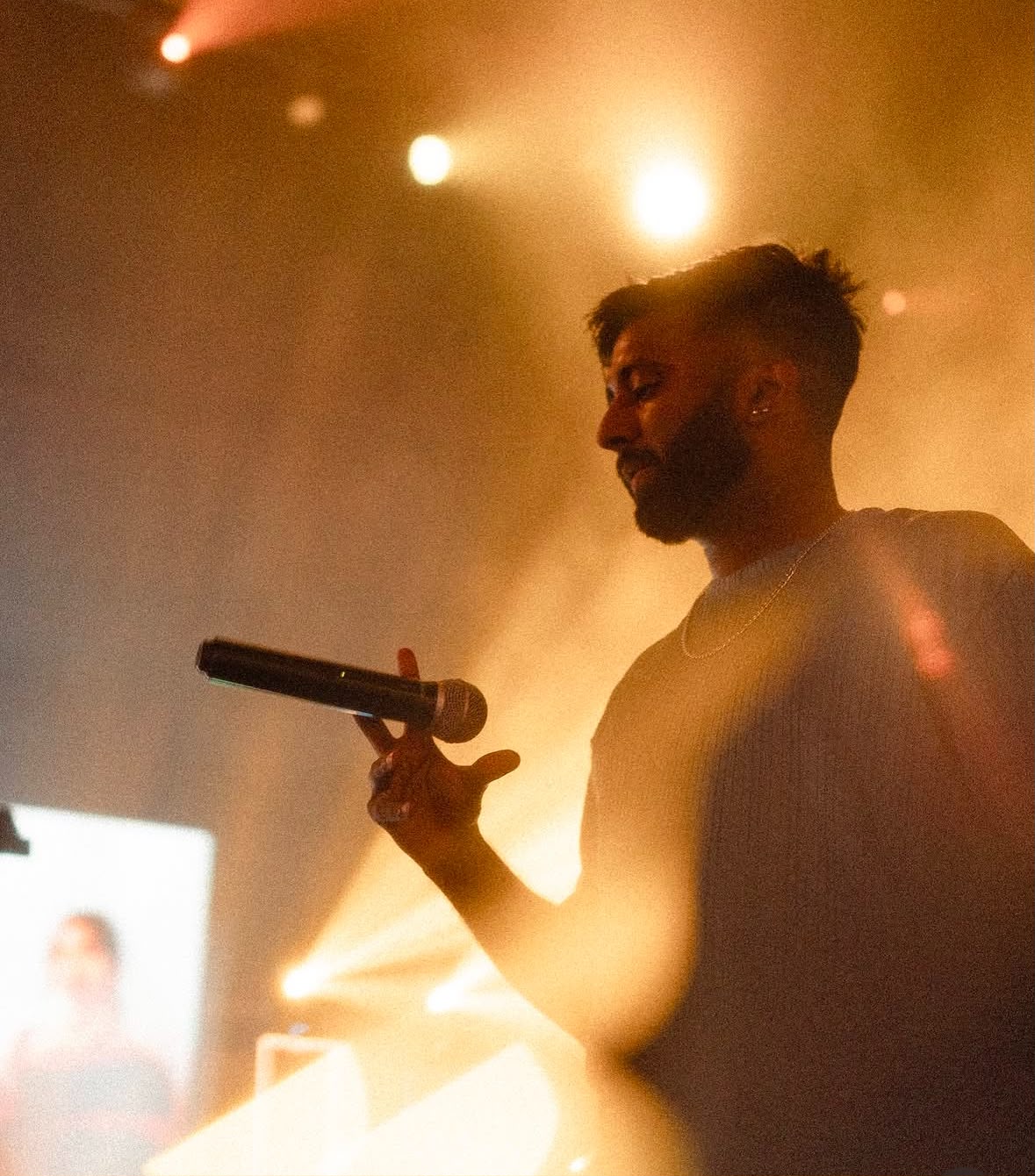
Photograph for ITFMA. All rights reserved.
In the evolving world of independent Tamil music, few names have carried the sound of the diaspora with as much clarity, consistency, and cultural confidence as Sahi Siva. A singer, songwriter, producer, and live instrumentalist, Sahi represents a new generation of Tamil artists who are not waiting for traditional industry structures to define their careers. Instead, he has built his own lane, connecting Tamil identity, global pop, R&B, hip-hop, and classical influence into a sound that feels both deeply rooted and internationally ready.
Sahi Siva's rise is more than just the story of another independent artist finding success online. It is the story of a Tamil creative raised in the diaspora, shaped by culture, family, language, and community, who has turned that foundation into a worldwide musical journey.
Sahi's connection to music started at a young age. Growing up in East London, he was introduced to Tamil music, sangeetham, and mridangam early in life. That classical foundation gave him more than technical ability; it gave him a cultural backbone. His music carries the discipline of traditional Tamil training while still moving with the energy of modern youth culture.
As he grew older, Sahi expanded his musicianship beyond classical roots. He taught himself piano and guitar, eventually performing covers of popular Tamil songs at university shows and cultural events. These performances helped him build a local fan base in London, especially through creative mashups and reinterpretations of familiar Tamil favourites.
Like many modern independent artists, Sahi's early growth was powered by social media. By posting covers on Instagram and YouTube, he was able to reach audiences far beyond the rooms he performed in. His ability to reimagine Tamil music with a fresh, youthful, and emotionally direct style quickly helped him stand out.
Sahi's transition from cover artist to original musician marked an important turning point. His talent caught the attention of MC Sai, one of the most influential names in the Eelam Tamil music scene. Through that connection, Sahi became part of Oru Nation and began releasing original music that would help shape his identity as an artist.
Songs like "Naan Kudikka Poren" and "Nenjinile Rebirth" introduced Sahi to a wider global Tamil audience. These records carried the energy of the diaspora: catchy, emotional, youthful, and accessible, while still holding onto Tamil language and cultural identity. They proved that independent Tamil music could compete for attention without relying on the Kollywood machine.
His debut album Vaeraan further established him as an artist with range. Rather than fitting into one sound, Sahi showed that he could move between love songs, party records, emotional storytelling, and genre-blending production. This versatility became one of his biggest strengths.
What makes Sahi Siva important is not only his voice or his catalogue, but the way he represents the global Tamil experience. His music does not feel limited to one city, one country, or one version of Tamil identity. It reflects London, Jaffna, Toronto, Chennai, Europe, and the wider Tamil diaspora all at once.
Sahi's sound sits at the intersection of Tamil pop, R&B, hip-hop, dance, and independent world music. He understands the emotional pull of Tamil melodies, but he also understands how young audiences consume music today. His songs are built for streaming platforms, live shows, music videos, social media edits, and community moments.
That balance has helped him become one of the most recognizable Tamil independent artists of his generation. He is part of a growing wave of diaspora musicians proving that Tamil music can exist outside of film soundtracks and still build loyal audiences around the world.
Sahi's second album, Unnaale, became a major milestone in his journey. More than just a collection of songs, the album represented growth, maturity, and ambition. It showed an artist stepping into a fuller creative identity, one that was confident enough to tour globally and bring independent Tamil music directly to fans.
The UNNAALE album world tour marked a defining moment for Sahi. Taking his music to international stages, he connected with Tamil communities across borders and proved that independent Tamil artists could create their own touring economy. For diaspora audiences, his shows became more than concerts; they became cultural gatherings.
This is where Sahi's impact becomes especially powerful. His career shows that the Tamil diaspora is not just an audience. It is a creative ecosystem. From London to Canada, Europe to Sri Lanka, Malaysia to Singapore, Sahi's journey reflects how scattered Tamil communities can still connect through music, language, and shared emotion.
“Sahi Siva has become one of the defining independent Tamil artists of the global diaspora era.”
Sahi's career has also been shaped by collaboration. From working with MC Sai and Ratty Adhiththan to connecting with Tamil dancers, producers, singers, and creatives across the world, he has shown the importance of building within the community.
His music videos and live performances often involve Tamil talent from different parts of the diaspora, helping create a larger cultural network around his work. This matters because independent Tamil music is still in the process of building its infrastructure. Every successful collaboration helps prove that there is talent, audience demand, and long-term potential in the scene.
Sahi's work also carries a strong Eelam Tamil connection. His story reflects a generation that inherited Tamil identity through family, community, school, and memory, but then translated it into a modern creative language. For young Tamils growing up outside of South Asia, that representation is powerful. It shows that Tamil culture is not frozen in the past; it is alive, evolving, and capable of reaching global stages.
Sahi's music stands out because of its emotional accessibility. His songs often feel personal, but they are written in a way that listeners can easily make their own. Whether it is romance, nostalgia, celebration, heartbreak, or confidence, his records are built around feelings that travel well.
Tracks such as "What A Vadivu," "Ammamma," "Devathai," "Thaali Thevaiyilla," "Venum," "Kaadhal Vaithu," and "Marankothi" show different sides of his artistry. Some records lean into playful Tamil pop, some carry romantic emotion, and others explore dance-driven energy. Across all of them, Sahi maintains a clear identity: modern Tamil music with global ambition.
His strength is not just in singing. As a songwriter and producer, he understands the full architecture of a song. He knows how to shape hooks, build moments, and create records that work both emotionally and commercially. That combination is what separates artists who simply release music from artists who build movements.
Sahi Siva's importance goes beyond numbers, streams, or tour dates. He matters because he is helping define what independent Tamil music can look like in the modern era.
For decades, Tamil music has been heavily associated with cinema. Kollywood remains one of the most powerful music industries in the world, but it has often overshadowed independent Tamil voices. Artists like Sahi are changing that. They are proving that Tamil music can exist outside of film, outside of traditional labels, and outside of geographic limitations.
He represents the possibility of a new Tamil music industry: one that is global, digital, community-driven, and artist-led. His career is a blueprint for younger Tamil creatives who want to build without waiting for permission.
As Sahi continues to release music, tour, and expand his creative world, his role in the Tamil independent scene will only become more significant. He has already shown that diaspora artists can create songs that travel, build communities that show up, and develop brands that live beyond the music itself.
Sahi Siva is not simply a Tamil artist from the UK. He is part of a larger cultural shift. He is one of the voices proving that Tamil music belongs on global stages, in independent spaces, and in the hands of artists who understand both tradition and the future.
In a time when the Tamil diaspora is searching for new ways to connect across countries and generations, Sahi's music offers something meaningful: a sound that feels familiar, fresh, and proudly Tamil.
His journey is still unfolding, but one thing is already clear, Sahi Siva has become one of the defining independent Tamil artists of the global diaspora era.
Submissions and reader letters are welcome at itfmaconnect@gmail.com.
Related Reading
Ratty Adhiththan and a Tamil Hip-Hop Without a Single Centre
Shaped by Jaffna, Malaysia and France, Ratty Adhiththan helped widen the definition of Tamil music while staying rooted in language.
Smith Asher Steps Forward Under Anirudh’s Albuquerque Records
Singer, producer, guitarist and programmer Smith Asher steps into the spotlight with “Annakiliye,” released on Anirudh Ravichander’s Albuquerque Records.

Dhee, Lara Raj and a Borderless Tamil Future
Dhee carried Tamil music outward. Lara Raj of KATSEYE found her way in from the Western mainstream. On “Vari Vari,” their journeys meet.